


 1-855-444-7537 / support@giftedsweetly.com
Table of Contents
- Step 1: Review the Personalization Proof Line by Line
- Step 2: Request a Custom Gift Sample Before Bulk Orders
- Step 3: Inspect Materials, Workmanship, and Finish
- Step 4: Test Print Durability, Closures, and Functional Parts
- Using a Custom Gift Quality Checklist With Pass/Fail Criteria
- What to Do If a Personalized Gift Is Wrong
- Placing Your Next Order With Confidence
- Frequently Asked Questions
Last Updated: October 28, 2026
Personalized gifts carry emotional weight: a monogram, name, or special date turns an ordinary item into a keepsake, which is why a crooked engraving or misspelled name stings more than a plain gift would. Gifted Sweetly offers personalized, sentimental presents and keepsakes for birthdays, anniversaries, and everyday appreciation, so the quality of each custom piece matters. This guide explains how to verify quality of custom gifts before the order is final.
Check the work when the box arrives; materials and finish can help you assess the item.
Quality checks also help you consider whether the finished item matches your expectations.
-
Personalization errors are the most visible problem
-
Material and finish issues often appear only after delivery
-
A clear checklist keeps the review consistent every time
Step 1: Review the Personalization Proof Line by Line
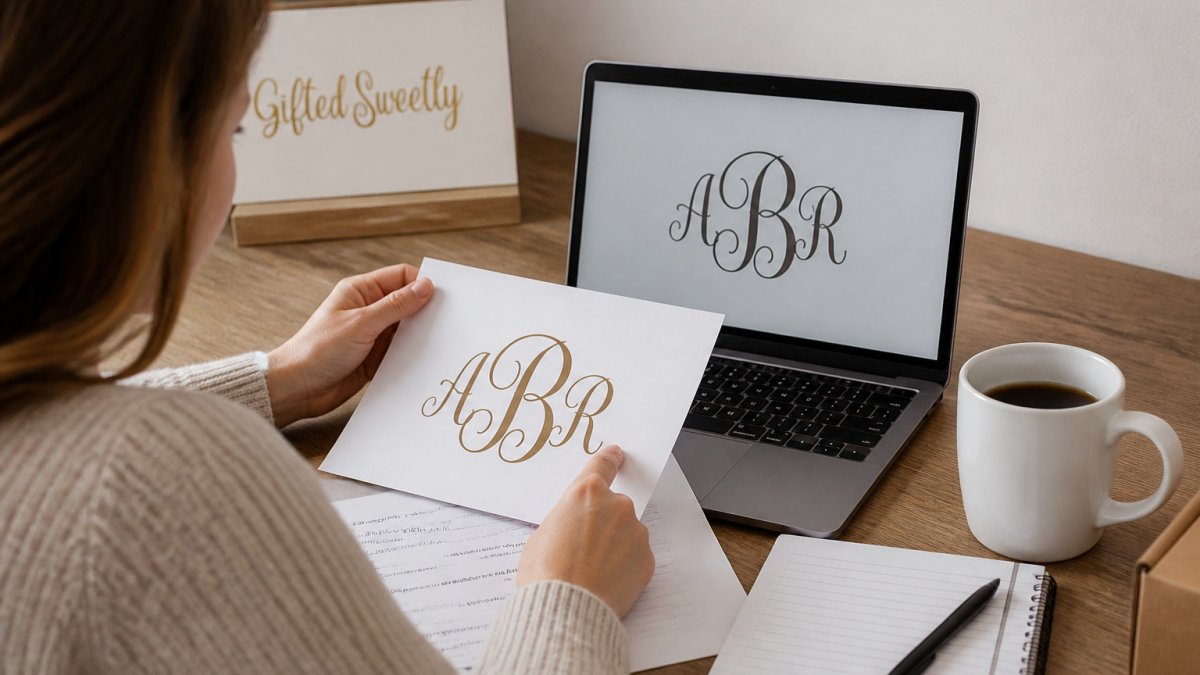
Read every character slowly, a single swapped letter can change a name completely, and compare it against your written order, not your memory.
Step 2: Request a Custom Gift Sample Before Bulk Orders
Get the sample approval in writing, and keep a photo of the approved sample for comparison when the finished items arrive.
Step 3: Inspect Materials, Workmanship, and Finish
When the gift arrives, inspect it before it is wrapped or handed over. For a concrete example of a canvas product, see the Bookworm Canvas Tote Bag, and use it to judge what good print finish and stitching look like. Hold it in good light and look from several angles; surface defects are easier to see with careful inspection.
Start with a universal first pass
Before material-specific checks, run every item through the same baseline:
- Compare the finished item against the written specifications and the approved sample.
- Check personalization placement and legibility at normal viewing distance.
- Run a finger along edges and seams for rough or sharp spots.
- Confirm color under daylight or a neutral 5000-6500 K light, not warm indoor bulbs.
- Photograph the item and any defect with scale before repacking.
Then move to the checks for the material in hand.
Textiles: apparel, blankets, totes, and embroidered items
Textiles hide seam and stitching defects that a quick look will miss.
- Stitching: check that stitch density is even and seams are straight with no puckering, skipped stitches, or loose thread tails. Turn the item inside out and inspect the back of embroidery for loose threads, backing show-through, or bunching.
- Embroidery and print: confirm letterforms are clean, with no thread breaks, fill gaps, or misregistration between colors. On printed textiles, check for cracking, smearing, or uneven ink weight, especially at edges.
- Fabric hand and weight: feel for thin or uneven areas, and check that the fabric matches the approved sample in weight and texture. Hold it up to light to spot thin spots or weave irregularities.
- Shrinkage and care: confirm the care label and, if the seller permits, test a small hidden area for colorfastness with a damp white cloth. Any dye transfer is a warning sign.
- Odor: a strong chemical or musty smell can indicate poor finishing or storage and is a legitimate quality concern.
Ceramics, glass, and enamel
Fragile materials fail in ways ranging from cosmetic to structural.
- Crazing and cracks: inspect glaze under raking light for fine hairline cracks (crazing), chips at rims and handles, and any crack that could propagate.
- Glaze defects: look for pinholes, bubbles, bare spots, or uneven glaze thickness, especially on food-contact surfaces.
- Warping and level: set the item on a flat surface to check for wobble, and check that rims are level.
- Decoration durability: confirm that printed or applied decoration is underglaze or otherwise durable; test a hidden area with a dry cloth for flaking.
- Food-contact safety: for mugs, plates, or bowls, confirm the seller states the glaze and decoration are food-safe and, where relevant, dishwasher and microwave safe.
Wood and bamboo
Wood defects often emerge with humidity and handling.
- Surface and grain: check for scratches, dents, raised grain, and sanding marks. Run a hand across the surface; it should feel smooth without snagging.
- Joints and assembly: inspect joins for gaps, glue squeeze-out, or misalignment, and gently flex the item to check for movement.
- Finish: confirm the finish is even, with no drips, bare patches, or overspray, and that edges are sealed.
- Engraving and inlay: check that engraving depth is consistent, edges are clean without burn marks or fuzz, and any inlay sits flush.
- Stability and moisture: check for warping or cupping by sighting along edges, and confirm the seller's guidance on humidity and cleaning.
Metal
Metal quality shows in finish consistency and how edges and joints are handled.
- Finish: look for scratches, polishing swirls, plating defects, and uneven brushing under raking light.
- Edges: check that cut edges are deburred and comfortable to handle; sharp edges are a safety issue, not a cosmetic one.
- Engraving and marking: confirm engraving is crisp and consistent in depth, with no double-strike or wandering lines.
- Joints and welds: inspect welds and soldered joints for porosity, gaps, or discoloration, and check that moving parts align.
- Corrosion risk: for items intended for everyday handling, confirm the seller's guidance on finish care and whether the metal is plated, coated, or solid.
Electronics and powered gifts
Powered gifts add functional and safety checks that visual inspection cannot cover.
- Power-up test: charge or insert batteries as directed and confirm the item powers on and performs its core function.
- Controls and connections: test every button, switch, port, and pairing function, and confirm that cables and connectors seat firmly.
- Battery and charging: check that the battery holds a charge through a short use cycle and that charging does not cause excessive heat.
- Labels and compliance: confirm the item carries the required markings and that the seller provides safety and care instructions. For gifts intended for children, verify age guidance and small-part warnings.
- Packaging protection: confirm the item arrived with adequate protection and that no connector or screen is damaged.
Printed and engraved items: paper, acrylic, leather, and mixed materials
Print quality is the most common failure point for personalized gifts.
- Registration and alignment: check that multi-color prints align and that artwork sits within the approved placement tolerance.
- Ink and engraving quality: look for smearing, banding, fill-in, or broken strokes, and confirm engraving edges are clean without scorching or fuzz.
- Adhesion: gently rub a hidden area with a dry cloth to check that print or coating does not lift or flake.
- Substrate condition: inspect for scratches, bubbles, adhesive residue, or uneven coating on acrylic, leather, and coated papers.
- Edge finish: check cut edges for burrs, fraying, or uneven trimming, especially on acrylic and leather.
Record what you find
Note the results in your checklist, including the specific check and the outcome. If a part or surface fails, record the failure and date, photograph it with scale, and contact the seller promptly.
Step 4: Test Print Durability, Closures, and Functional Parts
Keep the item away from direct sun and moisture during early tests; everyday conditions can reveal problems a quick visual look misses.
Using a Custom Gift Quality Checklist With Pass/Fail Criteria
A written checklist turns a casual look into a repeatable review, but it is only as good as its acceptance criteria. Define pass/fail thresholds and defect severity before you inspect anything.
Build the checklist around what can actually fail
Custom gifts fail in predictable ways. Structure your checklist by failure category rather than by product, then add product-specific lines underneath. A practical master list:
- Personalization accuracy, spelling, names, dates, punctuation, font, size, placement, and orientation of every personalized element
- Color accuracy, match to the approved proof or sample under the same lighting conditions
- Surface and finish, scratches, dents, smudges, bubbles, uneven coating, or adhesive residue
- Workmanship, stitching evenness, seam alignment, edge finish, join gaps, and symmetry
- Function, closures, hinges, clasps, magnets, zippers, stands, and moving parts operate as intended
- Print and engraving durability, adhesion, legibility, and resistance to light rubbing
- Dimensions, measured against the agreed specification, not eyeballed
- Packaging, protection, presentation, and absence of crushing or moisture damage
- Safety and compliance, sharp edges, small detachable parts, material labeling, and any age or food-contact warnings
Define objective pass/fail criteria
Vague criteria produce inconsistent decisions. Convert each line into a measurable test wherever possible.
Classify defects by severity
Not every flaw deserves the same response. Classifying defects as critical, major, or minor lets you decide quickly whether to accept, request a remake, or reject a batch.
- Critical defect: any personalization error (misspelled name, wrong date, wrong artwork), any safety hazard (sharp edge, loose small part, prohibited material for the recipient's age), or any functional failure that makes the gift unusable. Critical defects always fail and warrant a remake or replacement.
- Major defect: a visible flaw on a primary face or functional area, a prominent scratch, a significant color shift, misaligned placement beyond tolerance, uneven stitching on a visible seam, or a closure that sticks. Major defects usually fail; accept only if the seller offers a meaningful remedy and the gift's purpose is unaffected.
- Minor defect: a small cosmetic issue on a secondary or hidden surface, a difference detectable only under close inspection, or packaging scuffing that does not affect the gift. Minor defects typically pass, but record them so patterns across a batch become visible.
Run the inspection as a fixed protocol
Keep the completed checklist, photos, and order records together.
The article sorts custom gift defects into three severity tiers, which decide whether you accept, request a remake, or reject an item.
| Severity | Typical examples | Outcome |
|---|---|---|
| Critical | Personalization errors, safety hazards, functional failure | Always fails; remake or replacement |
| Major | Prominent scratch, significant color shift, misaligned placement | Usually fails; accept only with a meaningful remedy |
| Minor | Small cosmetic issue on hidden or secondary surface | Typically passes; record for batch patterns |
What to Do If a Personalized Gift Is Wrong
If an item fails your checks, act quickly. Review the return and remake policy to see how a wrong personalized gift is handled. Contact the seller as soon as you spot the problem with clear photos showing the issue, and explain exactly what does not match.
Review the Gifted Sweetly website for current shipping and order information before you order.
Placing Your Next Order With Confidence
Read the product details carefully. Our guide to choosing sentimental birthday gifts can help you narrow down options that carry real meaning. Gifted Sweetly offers a range of sentimental gifts, from apparel and accessories to custom keepsakes, for recipients and occasions.
Before an order, check the delivery timeline against your event date.
Frequently Asked Questions
What should I check before ordering a personalized gift?
Check the product details and the exact text, names, dates and spelling you plan to submit. Compare the product photos with the item details when available.
How do I check that names, dates, and messages are correct?
Check the text character by character, not just at a glance. Check capitalisation, punctuation, accents, date formats and line breaks, and say the message aloud to catch wording errors.
Can I request a sample before placing a bulk custom gift order?
Ask for a sample or a pre-production sample before committing to a larger quantity, especially for a first order with a new supplier. A sample lets you test personalization accuracy, print durability and finish on the actual material. If a sample is not offered, you can reduce risk by ordering one piece first and only placing the bulk order once it passes your inspection. Ask about any sample fee and whether it can be credited against the full order.
What should I do if a personalized gift is wrong?
Photograph the issue next to the order record, with a date stamp and a visible reference such as a packing slip or order number. Contact the seller promptly and describe the problem specifically. Keep the original packaging if possible.


